
Trading psychology is the single most underestimated factor separating consistently profitable traders from those who blow up their accounts. While most beginners obsess over technical analysis, chart patterns, indicators, and trading strategies, seasoned professionals know that mastering emotions, discipline, and mindset is what truly determines long-term success in the financial markets. Whether you trade stocks, forex, cryptocurrency, options, or futures, understanding trading psychology can be the difference between steady profitability and repeated losses.
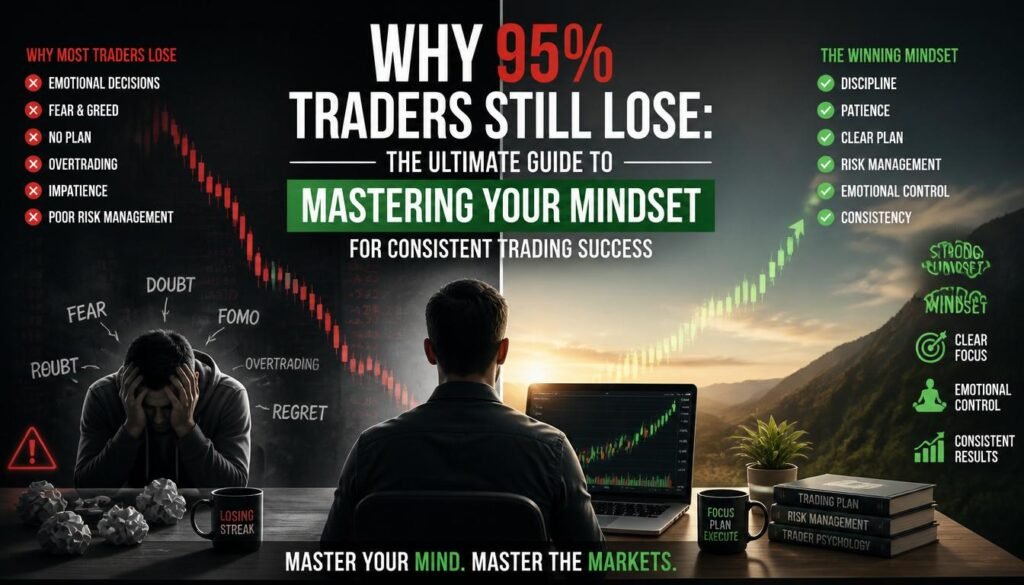
In this comprehensive guide, we will explore what trading psychology really means, why it matters more than strategy alone, the most common psychological trading mistakes, and proven techniques to build a winning trader mindset. This article is packed with high-value insights on emotional discipline, risk management psychology, fear and greed in trading, overtrading, revenge trading, and mental resilience — all essential keywords every trader searches for when trying to improve their performance.
What Is Trading Psychology?
Trading psychology refers to the emotional and mental state that influences a trader’s decision-making process. It encompasses feelings such as fear, greed, hope, regret, overconfidence, and anxiety, all of which can heavily impact trading performance. Unlike technical analysis or fundamental analysis, which rely on data and charts, trading psychology deals with the internal, often invisible battle traders face every time they enter or exit a position.
Even the most well-researched trading strategy can fail if a trader lacks emotional control. Markets are inherently uncertain, and this uncertainty triggers powerful psychological responses. Learning to manage these responses is the foundation of successful trading, risk management, and long-term wealth building in financial markets.
Why Trading Psychology Matters More Than Strategy
Many new traders believe that finding the “perfect strategy” or the “best indicator” is the key to consistent profits. However, professional traders and hedge fund managers consistently emphasize that psychology, discipline, and risk management account for a much larger share of trading success than the strategy itself.
A profitable trading system executed with poor discipline will almost always lose money over time. Conversely, a mediocre strategy executed with strict discipline, patience, and emotional control can still generate consistent returns. This is why trading psychology, mindset training, and emotional discipline are considered core pillars of professional trading education.
Common Psychological Challenges Traders Face
1. Fear of Losing Money
Fear is one of the most dominant emotions in trading psychology. Fear of loss often causes traders to exit winning trades too early, hesitate on valid entry signals, or avoid taking trades altogether. This fear-driven behavior prevents traders from following their trading plan and can severely limit profitability.
2. Greed and Overconfidence
Greed pushes traders to hold positions too long, oversize their trades, or chase unrealistic profits. Overconfidence, often triggered by a winning streak, leads to excessive risk-taking and ignoring proper risk management rules. Both greed and overconfidence are major contributors to significant trading losses and account blowups.
3. Revenge Trading
Revenge trading occurs when a trader tries to immediately recover a loss by entering another trade impulsively, without proper analysis or a valid setup. This emotional reaction is driven by frustration and the desire to “get even” with the market, often resulting in even bigger losses.
4. Overtrading
Overtrading happens when traders take too many trades, often due to boredom, impatience, or the fear of missing out, commonly known as FOMO. Overtrading increases transaction costs, exposes traders to unnecessary risk, and often leads to poor decision-making due to mental fatigue.
5. Analysis Paralysis
Some traders overanalyze every trade, constantly second-guessing their decisions. This excessive analysis, combined with fear of making a wrong decision, can cause missed opportunities and inconsistent trading results.
6. Confirmation Bias
Confirmation bias occurs when traders only seek information that supports their existing beliefs about a trade while ignoring contradictory evidence. This cognitive bias can prevent traders from cutting losses early or recognizing when a trade thesis is no longer valid.
The Role of Fear and Greed in Trading
Fear and greed are often described as the two most powerful emotions driving financial markets. The famous Fear and Greed Index used by many traders and investors reflects how collective market psychology influences price movement, volatility, and trend direction.
When fear dominates the market, traders tend to sell assets rapidly, causing sharp declines and panic selling. When greed dominates, traders chase rising prices, often buying at market tops due to fear of missing out. Understanding these emotional cycles is essential for developing a disciplined trading psychology and avoiding herd mentality mistakes.
How to Build a Winning Trader Mindset
1. Develop a Solid Trading Plan
A well-defined trading plan is the foundation of emotional discipline. Your plan should include entry and exit rules, position sizing, risk-to-reward ratio, and clear risk management guidelines. Having a structured plan reduces emotional decision-making and increases consistency.
2. Practice Strict Risk Management
Risk management is directly tied to trading psychology. When traders risk too much capital on a single trade, fear and anxiety naturally increase, clouding judgment. Professional traders typically risk only one to two percent of their trading capital per trade, which helps maintain emotional stability even during losing streaks.
3. Keep a Trading Journal
Maintaining a detailed trading journal allows traders to track emotional patterns, identify recurring mistakes, and measure psychological progress over time. Recording emotions before, during, and after each trade helps build self-awareness, which is a critical component of mastering trading psychology.
4. Accept Losses as Part of the Process
Every trader experiences losses; even the most successful professional traders have losing trades. Accepting losses as a natural part of trading, rather than a personal failure, helps reduce emotional stress and prevents revenge trading or impulsive decision-making.
5. Focus on Process, Not Just Profits
Traders who focus solely on profit and loss often experience heightened emotional volatility. Shifting focus toward following a consistent, rules-based process leads to better long-term decision-making and reduces the emotional rollercoaster associated with day-to-day market fluctuations.
6. Use Meditation and Mindfulness Techniques
Many professional traders incorporate meditation, deep breathing exercises, and mindfulness practices into their daily routines. These techniques help reduce stress, improve focus, and enhance emotional regulation, which are all crucial for maintaining a calm and disciplined trading mindset.
7. Set Realistic Expectations
Unrealistic profit expectations often lead to excessive risk-taking and emotional trading decisions. Successful traders set achievable, realistic goals based on statistical probabilities and proper risk-to-reward ratios rather than chasing overnight wealth.
The Importance of Emotional Discipline in Trading
Emotional discipline is the ability to stick to your trading plan regardless of market conditions or emotional impulses. Traders with strong emotional discipline can execute their strategy consistently, even during periods of high volatility or unexpected market news.
Building emotional discipline requires consistent practice, self-reflection, and a strong understanding of one’s own psychological triggers. Traders who master emotional discipline are better equipped to handle drawdowns, losing streaks, and unpredictable market behavior without deviating from their proven trading strategy.
How Professional Traders Manage Trading Psychology
Professional and institutional traders often work with performance coaches, sports psychologists, or trading psychologists to enhance their mental game. Many hedge funds and proprietary trading firms invest heavily in psychological training because they understand that consistent profitability depends largely on emotional control and disciplined execution.
- They set daily loss limits to prevent emotional decision-making after a string of losses.
- They use pre-market routines to mentally prepare for trading sessions.
- They review trades objectively, focusing on process rather than outcome.
- They practice detachment from individual trade outcomes.
- They maintain physical health through exercise, sleep, and proper nutrition, all of which directly impact cognitive function and emotional regulation.
Common Trading Psychology Mistakes to Avoid
- Trading without a clear plan or strategy
- Risking too much capital on a single trade
- Letting emotions dictate entry and exit decisions
- Chasing losses through revenge trading
- Ignoring stop-loss levels due to hope or denial
- Overtrading due to boredom or FOMO
- Comparing your performance to other traders on social media
- Failing to review and learn from past trades
Tools and Techniques to Improve Trading Psychology
1. Trading Simulators and Demo Accounts
Practicing on demo accounts or trading simulators allows traders to build confidence and test strategies without risking real capital, helping reduce anxiety when transitioning to live trading.
2. Cognitive Behavioral Techniques
Cognitive behavioral therapy techniques can help traders identify and reframe negative thought patterns, reducing anxiety, fear, and impulsive behavior during trading sessions.
3. Visualization Exercises
Many successful traders use visualization techniques, mentally rehearsing both winning and losing scenarios, to prepare emotionally for various market outcomes before they happen.
4. Accountability Partners or Trading Communities
Joining a trading community or working with an accountability partner can help traders stay disciplined, share experiences, and receive constructive feedback on their emotional and psychological patterns.
The Link Between Trading Psychology and Risk-Reward Ratios
Understanding risk-reward ratios is as much a psychological exercise as it is a mathematical one. Traders who consistently take trades with poor risk-reward ratios often do so because of impatience or the emotional need for frequent small wins, even when the math does not favor long-term profitability. A disciplined trader psychology framework encourages patience for high-probability, favorable risk-reward setups rather than chasing constant action in the market.
Position sizing is another area where psychology and risk management intersect directly. Traders who size positions based on emotional conviction rather than a fixed percentage of account equity often experience wild swings in both their account balance and their emotional state. Building the discipline to size positions consistently, regardless of how confident a trade feels, is a hallmark of professional trading psychology.
Trading Psychology in Different Market Conditions
Market conditions play a significant role in shaping trader psychology. During strong trending markets, overconfidence can build quickly as trades appear to work effortlessly, leading traders to abandon risk management once volatility returns. During choppy, range-bound markets, frustration and impatience tend to dominate, often pushing traders into low-probability setups out of boredom.
During periods of high volatility, such as major economic news releases or unexpected geopolitical events, fear and panic can spike dramatically. Traders with strong psychological preparation are able to either stand aside or execute their plan with discipline, while undisciplined traders often make impulsive decisions that lead to outsized losses. Recognizing how different market environments affect your emotional state is a key part of developing long-term trading psychology mastery.
Building Long-Term Mental Resilience as a Trader
Trading is a marathon, not a sprint, and mental resilience is what allows traders to survive losing streaks, drawdowns, and unexpected market shocks without abandoning their strategy. Resilient traders view losses as valuable feedback rather than personal failures, and they use each setback as an opportunity to refine their process.
Building this resilience involves consistent self-reflection, realistic goal setting, and a long-term perspective on trading performance. Rather than judging success based on the outcome of a single trade or even a single week, resilient traders evaluate their performance over dozens or hundreds of trades, focusing on whether they followed their process correctly. This shift in perspective, from short-term outcomes to long-term process evaluation, is one of the most powerful psychological upgrades any trader can make.
Conclusion: Mastering Trading Psychology for Long-Term Success
Trading psychology is not just a supplementary skill; it is the foundation upon which consistent, long-term trading success is built. While technical analysis, fundamental analysis, and trading strategies are important, they mean little without the emotional discipline, risk management mindset, and psychological resilience needed to execute them effectively.
By understanding common psychological pitfalls such as fear, greed, revenge trading, and overtrading, and by implementing proven techniques like journaling, mindfulness, realistic goal-setting, and strict risk management, traders can significantly improve their performance in the markets. Ultimately, mastering trading psychology transforms trading from an emotional gamble into a disciplined, strategic, and potentially profitable endeavor.
Whether you are a beginner trader or an experienced professional, continuously working on your trading mindset, emotional intelligence, and psychological discipline will always be one of the most valuable investments you can make in your trading career.